
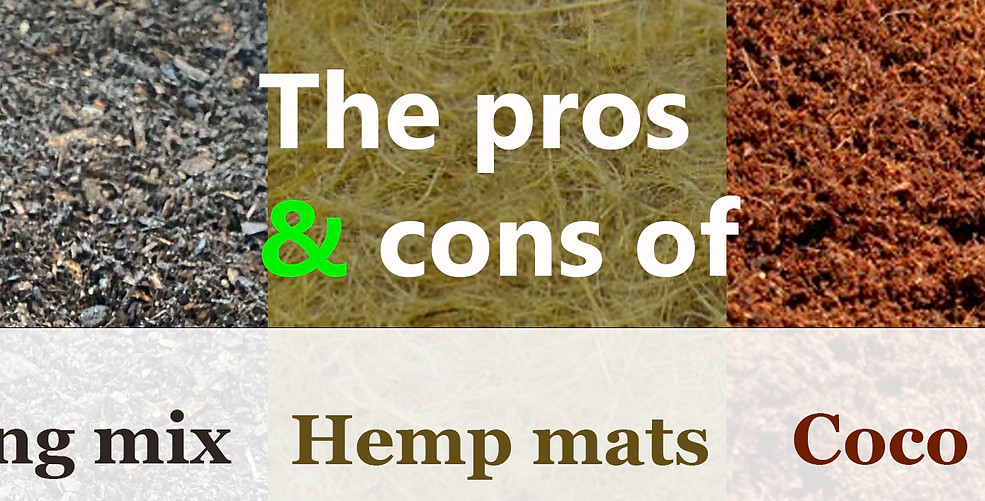
When growing microgreens, the medium you choose plays an important role in how well your crop grows. The three most common options are coconut coir, hemp mats, and potting mix, and each has its own advantages and disadvantages.
Coconut Coir
Pros
-
Sustainable and eco-friendly (a byproduct of coconut processing)
-
Holds water well, helping keep seeds moist
-
Good drainage, reducing risk of overwatering
-
Neutral pH, suitable for most microgreens
Cons
-
Low in nutrients, may need supplementation
-
Some products may contain salts, so quality matters
-
Can compact over time, reducing airflow
Hemp Mats
Pros
-
Natural and renewable material
-
Good moisture retention
-
Easy to use, clean, and convenient (no soil mess)
Cons
-
Can hold too much water if not managed properly
-
Higher risk of mould if airflow is poor
-
Very low in nutrients, may need feeding
Potting Mix
Pros
-
Nutrient-rich, supports strong growth
-
Good drainage when using quality mixes
-
Widely available and versatile
Cons
-
More expensive than other options
-
Heavier and less convenient to handle
-
Some mixes contain peat, which is less environmentally friendly
-
What Should You Choose?
Each medium has its place depending on your setup and goals.
-
For beginners: potting mix is often the easiest and most reliable
-
For sustainability: coconut coir or hemp mats are great options
-
For clean growing (no soil): hemp mats work well
You can also experiment with different mediums or even combine them to see what works best for you.